
Water-bottle rocket
Pressurized air pushes water out the nozzle; the bottle goes the other way (reaction force).
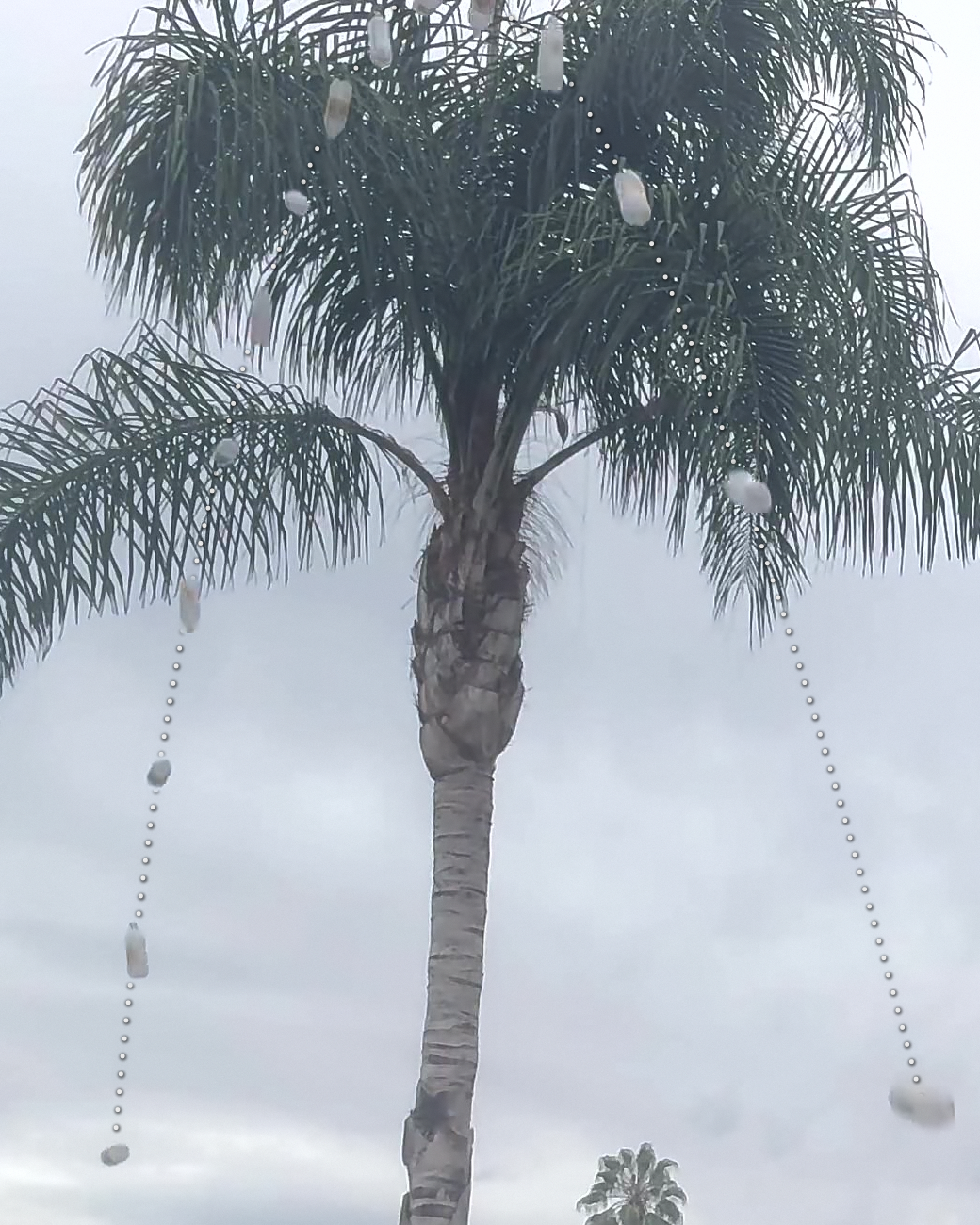
The experience
Kid-requested outdoor rocket: bottle, water, pump — count down, launch, chase the splash, refill and go again.
Grab bag
Kitchen first. If you're missing something, these are the pieces that worked at our table.
Opens Amazon with these items ready to add — you confirm the cart.
- Floor pump with a pressure gaugeSchwinn Air Center Plus Floor Bike Pump with gauge
Floor pump with a gauge. Garage first if you already have one.
- Wine cork, trimmed short so the pump's ball needle pokes throughNatural Soft Wood Corks 25-pack
Must seal the neck under pressure (~40–60 psi).
- Eye protection for the person pumping
RUN THIS
How to run it
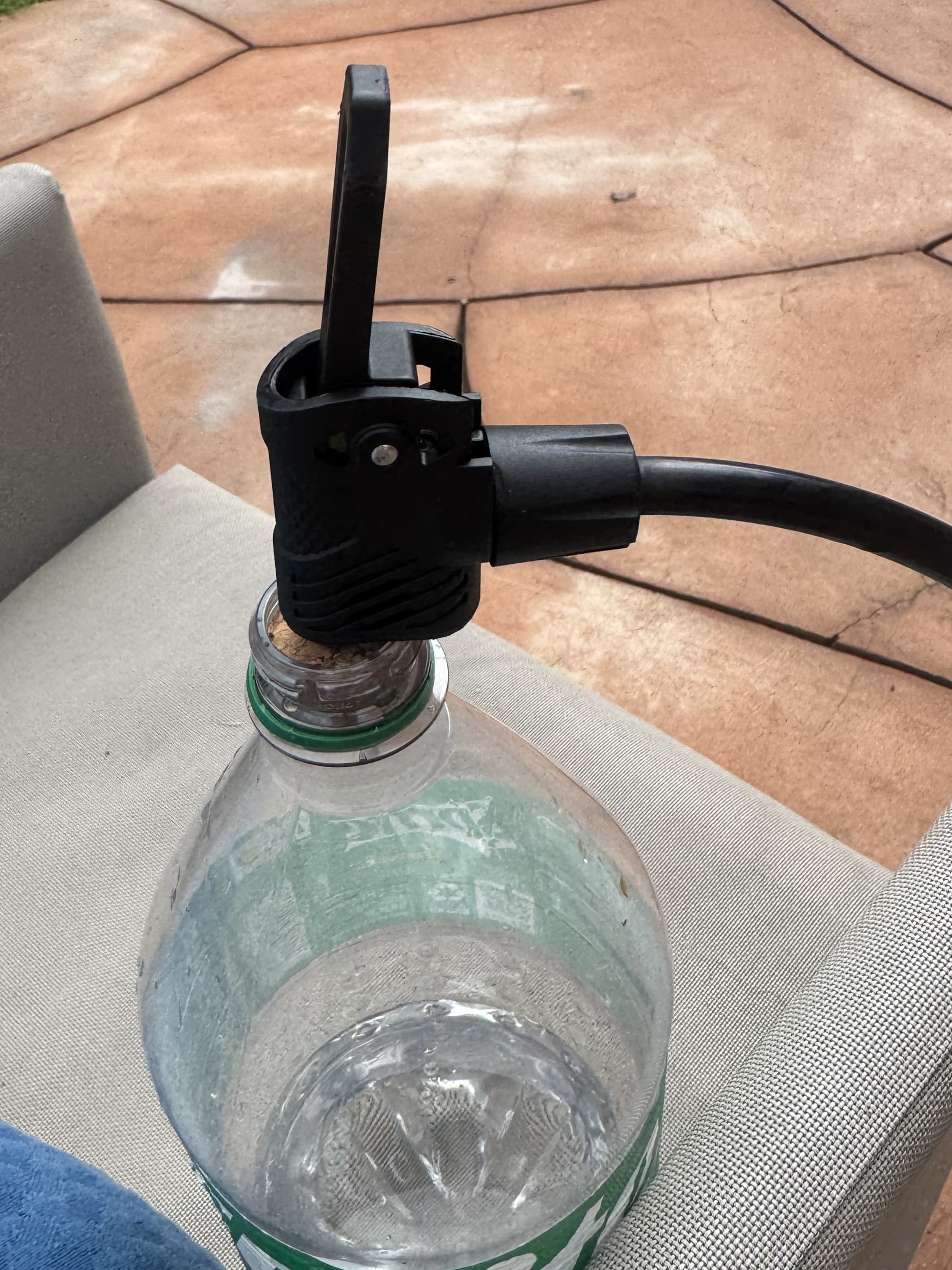
Trim a wine cork, start empty or about a fifth full, and rest the bottle at an angle between cushions on a chair. Pump with a floor pump until the cork lets go, then try more water.
Steps
 1
Cork
Trim a wine cork short enough that the floor pump's ball needle pokes through. Seat the cork in the neck.
- 2
Fill
Start with an empty 1-liter soda bottle, or about a fifth full of water. Later runs can take more.
 3
Set
Outside, rest the bottle at an angle between cushions on a chair.
- 4
Pump
Use a floor pump with a gauge. Stand at the end of the hose. Stop around 40–60 psi.
- 5
Again
The cork usually pops before 60 psi. Water leaves the neck and the bottle goes the other way. Add water and launch again.
Bear with me
Mechanism
Solid orange arrows are pushes. Dashed arrows show which way something moves.

Panel 1, "Pressure builds". Pumping pushes more air in through a needle in the cork. The air above the water gets packed tighter than the air outside, so its pressure is higher. That squeezed air pushes on every wall it touches, and on the water. The water passes the push on to the cork. The cork holds the neck shut.
On the left is the home setup. The bottle sits neck-down at an angle between cushions on a chair. The cork and the needle point down toward the seat. The body points up and away. The pump stands on the ground beside the chair, and the hose comes up from below. The window on the right is that same bottle turned fully neck-down so you can see inside.

Panel 2, "A push pair". When the cork lets go, the squeezed air pushes water out the neck. The water pushes the bottle the other way, just as hard. The two pushes are the same size and point opposite ways, and they act on different things, so they do not cancel. Water leaves through the neck. The bottle goes the other way.
On the left, water leaves down and back through the neck and the bottle goes up and away. The bottle and the compressed air push the water down and back. The water pushes that rocket system up and away with an equal force. As the compressed air expands, its pressure falls.

Panel 3, "Why a fifth gets more impulse". How full the bottle is changes the flight. With no water, the only thing that leaves is the squeezed air: a light, very fast puff. For the energy stored in that air, a light puff carries little total push. With about a fifth of the bottle full of water, the air throws that water out more slowly, and the total push is several times bigger, so the bottle goes higher. An empty bottle still flies. It just does not go as high. A bottle full to the top has no air to squeeze, so it stays put.
In this 1 L model at 40 psi, the bars are impulse: the push added up over the time it lasts. A fifth gives about 4.66 N·s and an empty bottle gives about 0.82 N·s. That is not a push at one moment, and it is not how high the bottle flies.
The home run sat the bottle at an angle. The pushes still lie along the neck: water out through the neck, bottle the other way.
Go deeper
Thrust lasts only while mass is leaving the neck, and it fades as the air expands and its pressure drops. That is why the fill matters. About a fifth is enough water for a high flight on a bare bottle. An empty bottle still goes, on a smaller total push. A full bottle has no air left to squeeze. Nozzle size and how well the cork seals change how fast the pressure dumps.
Name for this
Reaction force / Newton’s third law; momentum conservation; pressurized gas doing work on a fluid.
Try it: how much water gives the highest flight?
Set the water and the pump pressure, launch, and see which fill sends the bottle highest.
Notes from home
He was a little scared of the pop. Start with a 1/5 fill, or even an empty bottle, just to get an idea of your release pressure. Baby steps are great, so you don't break a window. The experiment was a blast. He loved it. We got a little nuts and almost lost a bottle on the garage; it bounced off it, but that was our sixth shot. A little leak at the cork made a water mess, but you're getting a water mess anyway. The 1-year-old was sleeping. We had the bottle at an angle, which made it easier to shoot and to guess where it lands. Don't build a base; just put the bottle on a chair outside between cushions. It's faster to set up. Also, trim the corks so your needle goes through. We also did a 2-liter bottle, straight up, 1/3 full, about 30 psi. It went so high he didn't want to do it again, but I think secretly he liked it. The work is cutting a cork and doing it once. After that it's easy to try new bottles, new fills, etc.