
Salt ice fishing
Salt can melt a little ice into water; that water can freeze again around a string. Pressure from a thin wire can also melt ice for a moment, then it freezes again.
The experience
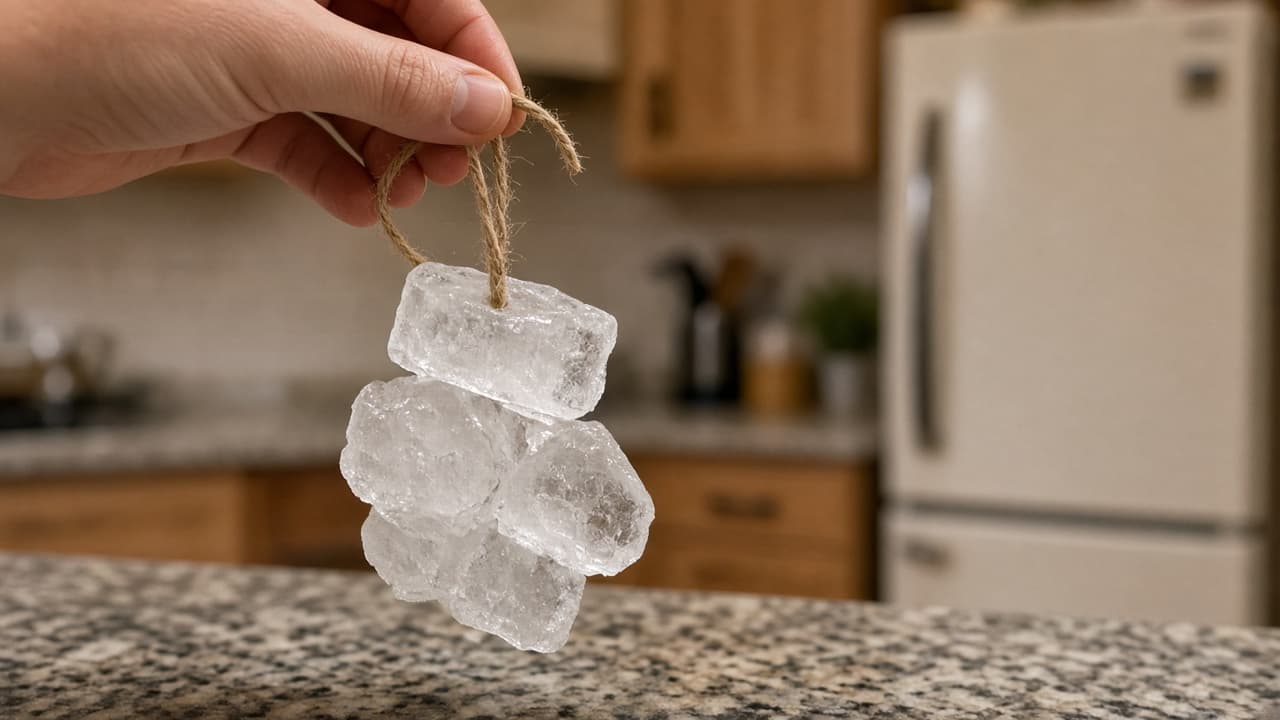
Two experiments on one morning. FAST is salt ice fishing with string (~minutes) — trial and error until the watery-bowl recipe clicks: lots of fresh ice in water, string over many cubes, tiny salt, wait ~60s, pull slow, catch a cluster. LONG is pressure melting with copper wire (~1–2 hours) — start it first so it runs while the kid fishes. Fun; not as entertaining as balsamic.
Get the bits
Kitchen first. If you're missing something, these are the pieces that worked at our table.
- The Hillman Group Copper Wire (18 gauge)
Bare copper craft wire for the pressure-melt track.
SAY THIS
Words at the table
Ages 1–2
- Cold. Wet.
- Pull… stuck!
- Look — the wire went in.
Ages 3–5
- FAST track: the string alone doesn’t catch. After a tiny pinch of salt and a wait, the ice hugs the string.
- FAST track: too much salt just makes a puddle. A little salt, then wait, then pull slow.
- LONG track: the wire is not a hot knife. The squeeze melts a thin path. Ice can freeze again behind it.
- LONG track: when the weights come off, you can pick up the ice holding both ends of the wire.
RUN THIS
How to run it
Two experiments on one morning. FAST is salt ice fishing (~minutes). LONG is pressure melting with copper wire (~1–2 hours). Start the wire first if you want both.
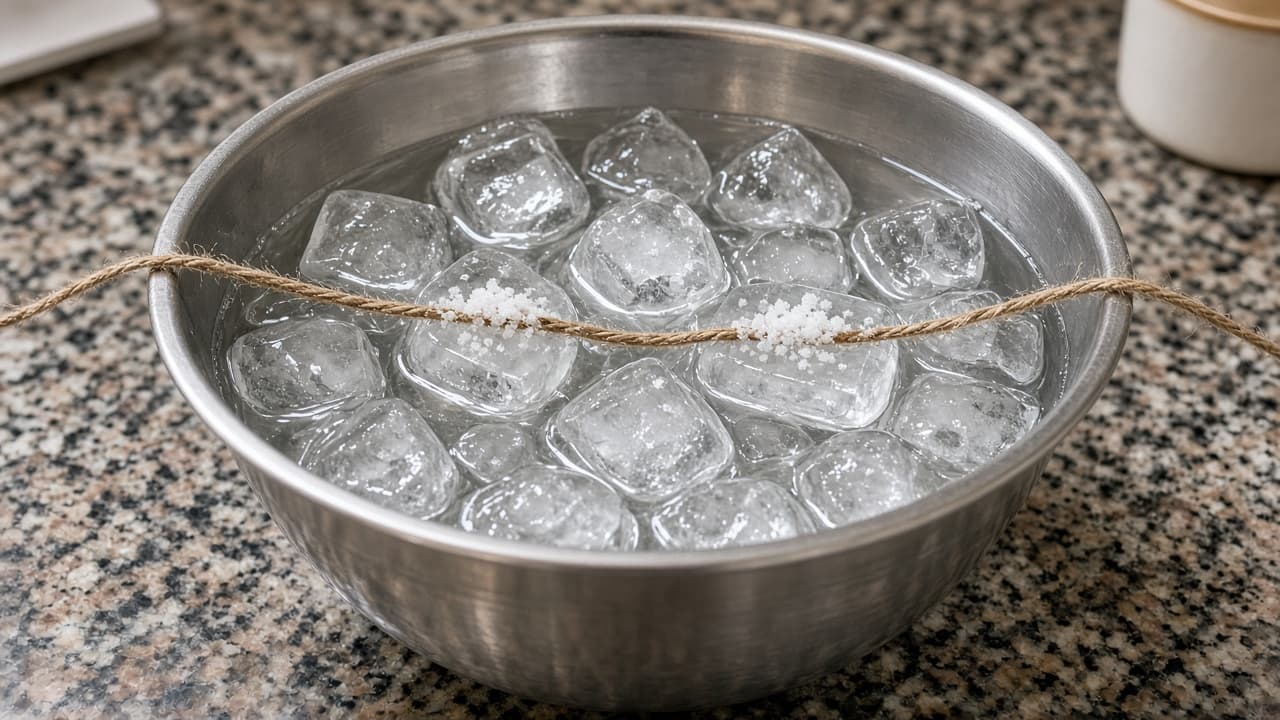
Salt ice fishing
String + tiny salt + wait ~60s + pull slow. Needs water and lots of ice.
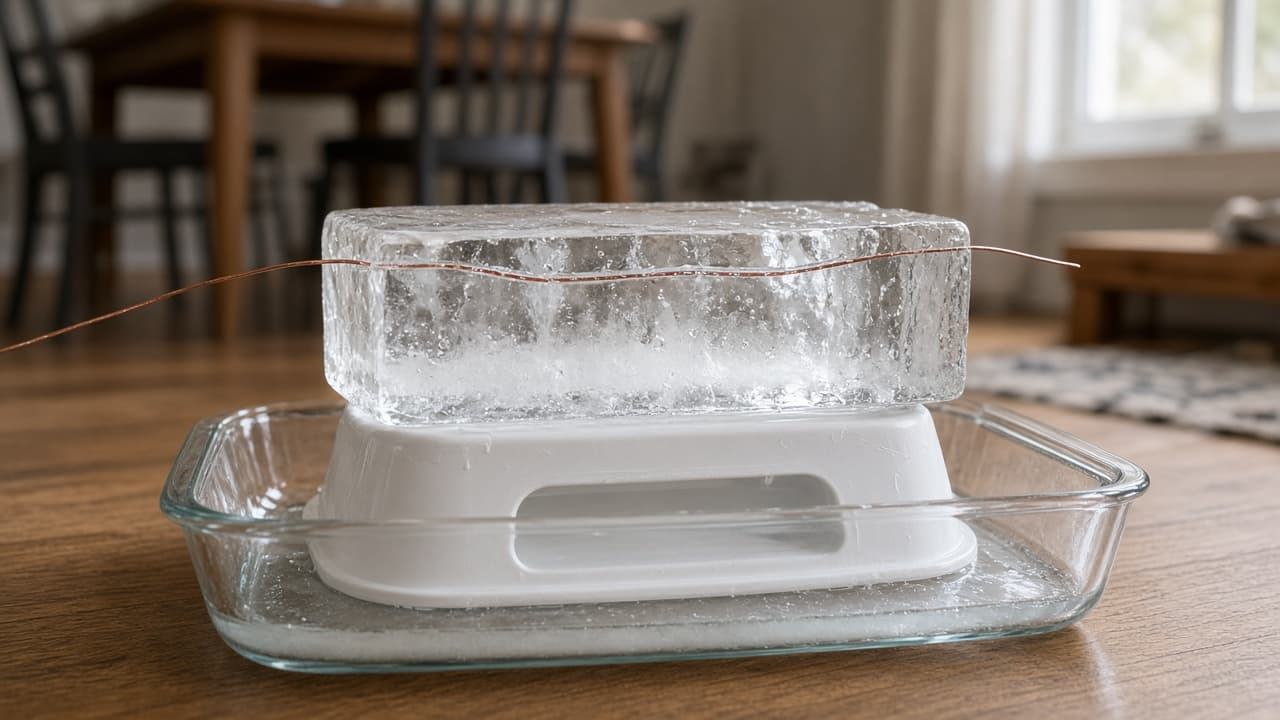
Pressure melting
Copper wire + bottle weights. Squeeze melts a path; ice can freeze again behind. ~1–2 hours.
Setup
Towels on floor. Fishing: bowl, water, lots of ice, twine, salt. Wire: ice block, copper wire, two closed water bottles, tray.
Steps
- 1
LONG — Pressure melting setup
Ice block on an inverted container inside a tray. Bare copper wire across the TOP of the ice. Hang a closed water bottle from EACH end. Leave 1–2 hours. Kid fishes while waiting.
- 2
FAST — Salt ice fishing
Bowl with water + lots of fresh ice. Drape twine over several cubes. Tiny pinch of salt where string touches ice. Wait ~60 seconds. Pull both ends slowly — cluster catch is the win.
- 3
FAST — If fishing fails
Too much salt = puddle (wipe, new ice, tinier pinch). No water = harder. Pull too fast = snaps. About one in four pulls worked until we used water + lots of ice + slow pull. Kid dumping salt is fine; reset and try again.
- 4
LONG — Wire payoff
Wire sinks; ice can refreeze above. Remove bottles. Lift the ice by both wire ends.
- 5
Optional color tunnels
Salt + one drop food coloring on a spare cube — tunnels and puddles.
KNOW THIS
What’s happening
Mechanism
Two different mechanisms on one morning. FAST fishing = salt / freezing-point depression. Salt melts a thin bit of ice into water. The rest of the cube is still cold enough to freeze that water again around the yarn fibers — an ice hug — so you can lift by the string. A tiny pinch is enough; a mountain of salt usually digs a puddle. Water in the bowl helps: cubes stay wetter at the contact line. Draping over many cubes raises the odds. Pulling slowly keeps fresh ice bridges from snapping. LONG wire = pressure melting. Hanging bottles squeeze a thin line into the ice. That pressure melts ice for a moment under the wire. As the wire sinks, water above can freeze again. The block can stay one piece even if the wire cuts through. Room-temperature copper is not a hot knife — the squeeze does the melting.
Does not prove
It does not prove salt “glues” the string (it’s melt-then-refreeze, not glue). It does not prove more salt is better — a mountain often just makes a puddle. It does not prove the wire “saws” like a knife without melting — pressure melts a thin path; refreeze can leave the block whole. It does not prove the wire is hot — room-temperature wire works because of the squeeze.
Go deeper
No-salt vs salt string side by side in the same watery bowl. Food-coloring tunnels on a salted cube. Leave the wire longer and compare groove depth. Try nylon fishing line vs cotton twine (nylon often fails the hug).
Numbers
Wait ~60 seconds after a tiny pinch of salt. Exact grams don’t matter; “tiny pinch” does. Wire can take on the order of 1–2 hours with bottle weights at kitchen temperature.
Name for this
FAST: freezing-point depression (plain “ice hug” first). LONG: pressure melting / regelation (plain “squeeze melts a path” first).
Trap 1
- Wrong
- Salt makes the string sticky so it grabs the ice.
- Why
- Salt isn’t glue. It melts a thin bit of ice; cold ice refreezes that water around the string.
- Replace
- Salt melts a little ice into water. The cold ice freezes that water around the string — an ice hug.
Trap 2
- Wrong
- The wire is hot, so it melts through like a knife, and of course the ice falls apart.
- Why
- Room-temperature wire isn’t a heated knife. Thin pressure melts a path; ice can refreeze behind the wire, so the block may stay one piece.
- Replace
- The bottles squeeze a thin line. That squeeze melts a little path. When the squeeze moves on, it can freeze again.
From our kitchen
Notes from home
Needs water. Trial and error. The kid can dump salt everywhere — that was fine. About 1/4 of the attempts worked until we got it. Best recipe: a ton of fresh ice in a ton of water, string over many cubes, catch ~5 pulling slowly. Got smoked. Kid was excited. Copper wire is the long game (~2 hours). Give the kid a fishing mission while it runs. Fun beat: remove the weights, pick up the ice holding both ends of the wire. Kid was excited explaining the wire to mom. Fun. Not as entertaining as balsamic.
Stretch it
Food-coloring tunnels on a salted cube. Leave the wire longer and compare groove depth. Side-by-side: dry tray fishing vs watery bowl fishing.